 Back
Back

An OCIO search consumes a meaningful amount of time and organizational resources. Organizations working with a search consultant should generally plan for a four- to six-month process. If you are running the process yourself, we encourage committees to budget six to nine months, if not longer. The exact timeline depends on the number of candidates, the organization's complexity, and the number of stakeholders involved. But perhaps more important than the calendar is understanding where the time goes—and how to make the most of it.
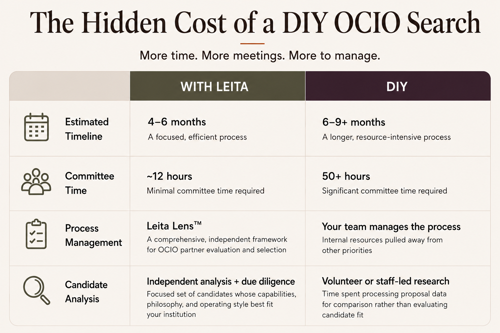
The meeting time itself is usually manageable.
The less obvious work happens between meetings.
Somebody needs to manage the process. Somebody needs to gather and analyze information. Somebody needs to decide which candidates to bring forward. Somebody needs to keep the search moving.
Whether you use a search consultant or conduct the search internally, the work still exists. The question is simply who performs it.
Why the Difference?
Search firms obviously bring expertise. But they also bring templates, a defined process with clear milestones, and familiarity with gathering and analyzing information.
We prepare candidates before each interaction and establish clear objectives for each meeting. We know what information committees need and when they need it.
Perhaps most importantly, we don’t reinvent the wheel.
Common DIY Mistakes
Organizations can and do run successful searches internally. But we frequently see a few common issues.
One is reviewing too many candidates. More candidates create more work and don’t necessarily improve outcomes.
Another is setting unrealistic timelines. Searches take time, and delays are common.
The most damaging issue is often the loss of momentum. Searches that drag on can become difficult to complete as schedules change and priorities shift. In some cases, a stalled process can even lead to starting over, which is frustrating and costly.
Where Should We Start?
Remember, an OCIO search is a project, not an event.
Before beginning, it can be helpful to ask:
How much committee time can we realistically commit?
Who will manage the process?
How many firms do we want to evaluate?
What timeline are we trying to achieve?
Setting realistic expectations at the beginning can help organizations maintain momentum and ultimately make better decisions.
In summary, while an OCIO search is a significant undertaking, thoughtful planning and a realistic perspective can make the process far more manageable. Whether you engage a search consultant or go the DIY route, success depends on setting clear expectations, maintaining momentum, and dedicating the right resources from the start. Don’t underestimate the value of communication and check-ins throughout the process. With preparation and discipline, your organization will be well-positioned to select the OCIO partner that best aligns with your goals.



 anna@goleita.com
 678-322-7182
 /goleita